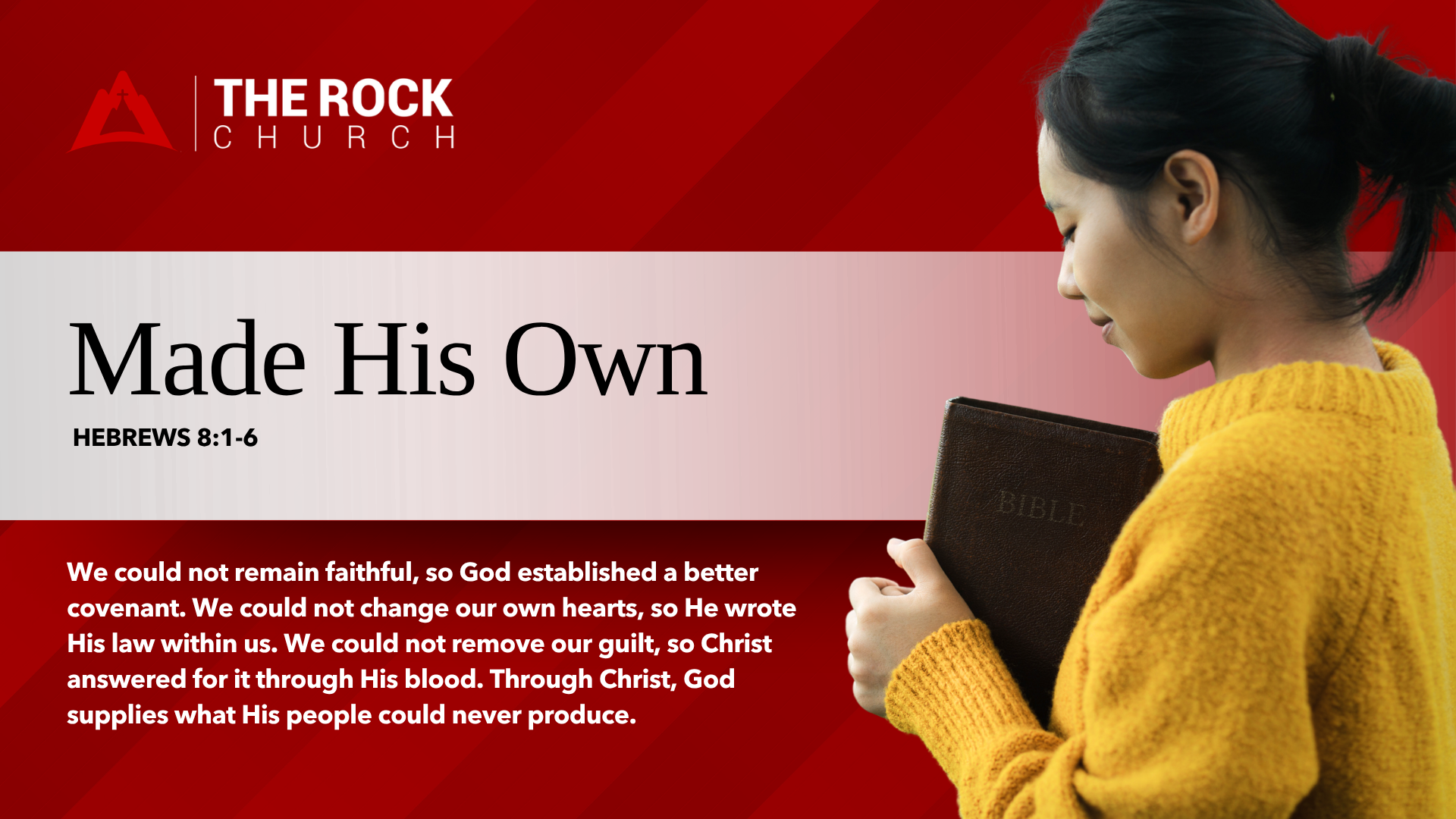
The following is a sermon transcript from our Sunday Service at The Rock Church in Mount Laurel, New Jersey. Each week, we gather to worship, learn from God’s Word, and grow together. This transcript is provided as a free resource to encourage and equip you in your walk with Christ. While you’re welcome to read and share this content for personal use, we kindly ask that it not be redistributed or published elsewhere without prior written consent from The Rock Church.
Introduction
Some years ago, I discovered my basement had flooded. No coincidence. The water heater had died. I thought to myself, I can do this. But I took it a step further. I was going to upgrade from the electric water heater to a tankless gas heater. I went online. I drove to get the unit. I started running the gas lines to install it. And then I ran into a problem. I couldn’t stop the water pipe joints from leaking. I kept trying, being more desperate to get the hot water running for my family. Eventually, weary and discouraged, I realized I cannot do this on my own. So I called Polsinelli’s dad. And he happily came out and did what I couldn’t do. I kept trying to pay him, but he refused. He was just happy to help me in my time of need. I wanted to pay him back. He wanted me simply to receive the kindness that he extended.
And that is a small picture of something we struggle with before God. Even as believers, we can live as though we have to earn what God has freely given. We trust Christ to save us, and then we try to prove that we were worth saving. We think, God, I can do this. I can work hard enough. I can prove myself to you. And then we fail again. And we become weary and discouraged, wondering how can we make things right? We hesitate to come to him until we have something better to show.
Our problem goes much deeper than leaking pipes. We have sinned against a holy God. We need him to forgive our sins and change our hearts. Our promises to do better cannot erase our guilt or give us new hearts. We need God to do what we cannot. And that’s where Hebrews takes us to the Israelites.
To a people who had broken God’s covenant. Yet God took the initiative and promised graciously this better covenant fulfilled through Christ.
These promises give us reason to come to him, even as we are painfully aware of all of our failures, all of our shortcomings. We could never earn our place with him. But through Christ, he makes us his own.
So here’s the big idea of our passage. Through Christ, God supplies what his people could never produce.
Sorry, it’s been updated since then. I did a little tweaking. Okay. You can see that summarizes those three points. We’ll see that in three ways, and they’re listed there.
God establishes a better covenant for an unfaithful people. He changes them from within and forgives their sins. Why? So that they can know him. Our God is relational. He cares deeply about us knowing him.
Point One: God Responds to Our Unfaithfulness with a Better Covenant
(Verses 7–9)
So let’s begin with that first promise that comes from verse 7. God responds to our unfaithfulness with a better covenant. So we read verses 7 to 9. Let’s do that again.
Hebrews chapter 8.
For if that first covenant had been faultless, there would have been no occasion to look for a second. For he finds fault with them when he says, “Behold, the days are coming, declares the Lord, when I will establish a new covenant with the house of Israel and the house of Judah. And not like that covenant that I made with their fathers on the day when I took them by the hand to bring them out of the land of Egypt. For they did not continue in my covenant, and so I showed no concern for them, declares the Lord.”
The First Covenant
Verse 6 reminds us, as you look back one verse, that Christ is the mediator of a better covenant. Established on what? Better promises. Verse 7 explains why another covenant was needed. If the first covenant had brought everything that God’s people needed, there would have been no need for a second. You see that? But what is the first covenant? What is he talking about? It’s the covenant God made with Israel through Moses at Mount Sinai. Verse 7 makes that clear by connecting it to their deliverance from Egypt.
This covenant governed Israel’s life and worship. It included the Ten Commandments, laws for their life as a nation, instructions concerning priests, sacrifices, and sanctuary. It included blessings for obedience and cursings for disobedience.
The author’s not saying here, keep in mind, that the law is bad. No, no, don’t misunderstand. Romans 7:12 tells us that the law is holy and righteous and good. But here’s what the Mosaic law did. It exposed sin. Its priests and sacrifices could not provide that complete cleansing, that lasting access to God that Christ provides. Hebrews 7:11 raised that same question. If perfection could come through the Levitical priesthood, why would another priest be needed?
Those priests and sacrifices pointed forward to Christ. Old Testament believers were saved through the same Christ as we are. Their forgiveness rested on his coming sacrifice, whereas we look back to his finished sacrifice. The Mosaic Covenant fulfilled God’s promise in preparing the way for him.
God Finds Fault with the People
Now, look at verse 8. God finds fault with the people. The covenant had limitations. And the people were guilty of breaking it. God had given them his commands. I have saved you out of Egypt. I have brought you out with a mighty outstretched arm and done great things among you. And yet now, I want you to reflect my character, my nature. Yet they persistently turned away from him in idolatry and disobedience, worshiping false gods, doing their own thing.
Let me ask you, in what ways are you resisting what God has made clear in his word? Is there someone you keep refusing to forgive? Is it a cutting remark that you shout with, you keep on justifying that it was okay? A sin that you have learned to simply explain away. It’s just this pet that I have. I’m used to it now. What are you defending? That God is calling you to confess.
The Promise from Jeremiah
The author now, what he does is quoting from Jeremiah 31, verses 31 to 34. And if you recall or know the book of Jeremiah, what’s happening here as to this prophet ministered. It’s the northern kingdom of Israel had been conquered by Assyria and its people scattered. And now Judah, the southern kingdom, is facing judgment at the hands of Babylon. Listen, things are not going well for the people of God. Generations of covenant breaking had brought devastating consequences. Our sin has consequences. The people who had received God’s commands and experienced his repeated kindness rejected him.
Yet into that setting, into that place of great despair, great hopelessness, “Oh God, what are we going to do?” Notice what the Lord does. He establishes this announcement, the days are coming, people of God, the days are coming when he would establish a new covenant with his people. Notice whom he names here. It’s the house of Israel and the house of Judah. Both had broken his covenant. Yet his promise of restoration embraced both houses of a divided people. Consider that. This better covenant would be fulfilled through Christ. God would deal with their guilt, change their hearts, something they could never do for themselves.
Taken by the Hand
But before unfolding these promises, verse 9 takes us back to just the tenderness of their rescue. God describes the day he took them by the hand to bring them out. You picture a father standing beside his little boy on a busy road. The boy can’t judge the traffic or safely cross on his own. So the father reaches down, takes him by the hand and leads him across. There’s strength in that hand. But there’s also tenderness. Tenderness. The father knows the danger, understands the way, and cares for his son.
And that’s what makes these next words so painful. They did not continue in my covenant. They turned away from the God who had so tenderly led them to freedom. Belonging to Israel outwardly did not mean that every Israelite had a heart of faith. Again and again, the nation broke the covenant that God made with them. And so when God says that he showed no concern for them, he’s describing his judgment upon them. He gave them over to the consequences that their covenant breaking deserved. And exile was part of that judgment.
Their judgment warns us not to harden our hearts or treat sin lightly. But if you are trusting Christ and grieving over your sin, do not conclude this: I failed God again, so he has stopped caring for me. Do not. Your security rests not in your faithfulness, but in Christ, ultimately.
Even as God recalls his people’s unfaithfulness, you’ve got to consider the patience and the kindness of our God. Even as he is fully aware of their obstinacy and rebellion, he announces this covenant through which he will forgive them and change them from the inside out.
Therefore, we should stop defending our sin, confess it, and return to him.
Point Two: God Changes Our Hearts and Makes Us His Own (Verse 10)
And in verse 10, he begins now to explain what he will do within his people. This is the centerpiece of our text. Let’s read it again in verse 10 as we consider the second point. God changes our hearts and makes us his own. This is verse 10.
For this is the covenant that I will make with the house of Israel after those days, declares the Lord: I will put my laws into their minds and write them on their hearts, and I will be their God, and they shall be my people.
I Will Put My Laws into Their Minds
God begins to unfold the better promises. Notice his words, “I will make.” This covenant rests on God’s gracious commitment. He supplies the faith and obedience his people need. We depend on the God who faithfully fulfills his promises.
He first spoke this promise to the house of Israel. And through Christ, believing Jews and Gentiles share in its blessings. These blessings come through God’s grace. We can never earn these things.
And what does God promise to do? To put his laws in our minds, to write them on our hearts. Yes. Together, these promises describe this great renovation project that happens within. This renewal from within. He changes how we think, what we love, and how we live. And through his word, the Holy Spirit opens our understanding and brings us to love what God commands us.
Consider someone who has always defended his bitterness. He remembers every offense against him. Builds a case. Says why he deserves to be remaining so angry. When he hears Christ’s command to forgive, his first instinct is to explain why his situation is the exception. “You don’t understand how I was hurt.” Then through his word, the Spirit begins changing his thinking. He sees how much mercy Christ has shown him. And he begins to recognize what his bitterness is doing in his heart.
Sounds like this. I keep rehearsing their wrong because I want to hold it out against them. Oh, but God is right about this, about what this is doing to my heart. Something changes in what he wants. “Lord, you have been so merciful to me. Help me to show mercy. I still feel hurt. The pain is real, but I want to obey you.” The hurt may remain. Forgiveness may be costly. Yet he begins to pray for the person, the very person whose offense he used to rehearse. He once defended his sin, and now he asks God to help him fight it.
A Heart of Flesh
This is the kind of inward change God promised through Ezekiel. Ezekiel 36:26–27. God promises to remove that heart of stone and give his people a heart of flesh. He puts his Spirit within us and causes us to walk in his ways. A heart of stone, as you can imagine, is a hard heart toward God. It resists his commands. It insists on its own way. But God gives us a heart that responds to him. This heart of flesh, one that can be corrected and shaped and led.
Richard Sibbes describes it beautifully, the wonderful Puritan. Christ sets up his throne in the very heart and then alters its direction. He even goes to say that he shapes that heart. He molds that heart. He sits on the throne of that heart. He rules within us, changing what we love and what we pursue. We begin to welcome his authority. “Lord, you are Lord over all, ruler over all. Come on. Help me out.” And ask him to shape our lives according to what his word says.
God commands, God changes what we want. You’ve seen that in your life? Your desires changing? So we begin to want what he commands. We don’t hear his commands and go, “Lord, oh no, too much, too burdensome.” It is a delight. It is a joy. “Lord, I want to obey.”
A Letter from Christ
2 Corinthians 3:3, Paul describes the Corinthians as a letter from Christ written by the Spirit of the living God on human hearts. You see that beautiful language? Their lives bore the handwriting of God. They still had plenty of struggles, yet his Spirit was changing them from one degree of glory to another.
Have you ever gone back to apologize when your pride wanted you to stay quiet? You ever ask God to help you to love someone you’d just rather avoid? When faith in Christ moves you to those steps, even through a real struggle, there is a reason to thank him. The obedience you now desire is the evidence of his grace in your life.
But you may ask this question. “Oh, but Pastor, my struggle, my progress is so slow. Why do I still struggle with this?” Slow growth does not mean God has stopped working. Keep coming to his word. Keep gathering with his people. Keep asking him for help. And then take that next step of obedience that he’s placed before you.
If you have spoken harshly, go back and ask for forgiveness. Own what you’ve said without adding, but you did this. If you’re hiding a sinful habit, bring it into the light with a trusted believer who can help you to fight it. If you keep rehearsing someone’s offense, ask God to help you. Put away that bitterness. Seek that person’s good. These steps may be difficult, but you can ask your Father for help and act on what his Word makes clear.
What would that obedience look like before this day is over? Maybe you already know the conversation you need to have. You ask him for courage and you take that first step. The Spirit who changes your heart also provides the strength to obey.
I Will Be Their God, and They Shall Be My People
And God promises more than that. Change within. Minds and hearts. He now says we belong to him. “I will be their God. They shall be my people.” Similar promises, Genesis 17:7 and Exodus 6:7. God has always intended, it’s always been part of his plan, to bring a people near to himself.
But what does it mean that he will be our God? It means that he commits himself to us. It means that he knows us, he cares for us, and he receives us through Christ. We can bring our needs to him. We can trust his promises. And we can draw near in worship. The God who rules over all things has made us his own. He knew everything about us when he made us his own. In Christ, as the song goes, we are both fully known and fully loved.
And notice that other half. “They shall be my people.” We belong to him. He has a claim over our lives. We trust him. We worship him. We learn to walk in his ways. He brings us into a relationship in which we want to please him. And he brings us into a people. Look around this room. Go ahead. Look around. All of us who trust in Christ belong to the same God. We are part of his family, called to love, called to care for one another.
Now, where do you feel you must keep proving you deserve a place, your place before him? We can bring those fears that we have into our relationship with God and those things that we say, which are, have I done enough? Am I useful enough? Does he still want me? But listen to his promise. He says, “I will be their God and they shall be my people.” That’s it. Done.
If you belong to Christ, your place with God is secure. You can come to him with your needs. You can confess your sins. You can depend on his care. And that belonging gives us reason to obey. We want to honor the one who has loved us and brought us near. We obey because he has made us his own.
Point Three: God Forgives Our Sins So That All His People Will Know Him
(Verses 11–12)
God now tells us how fully his people will share in this relationship. Every one of them will know him. And he tells us what makes that fellowship possible. His forgiveness.
Let’s read together verses 11 to 12, as we consider that God forgives our sins so that all his people will know him.
And they shall not teach, each one his neighbor and each one his brother, saying, “Know the Lord,” for they shall all know me, from the least of them to the greatest. For I will be merciful toward their iniquities, and I will remember their sins no more.
They Shall All Know Me
Listen to the promise in verse 11. “They shall all know me.” Many Old Testament believers truly knew and loved God, but someone could belong to Israel, participate in its worship, while remaining far from him. But everyone who belongs to this new covenant knows the Lord. God brings each of his people into a saving relationship with himself.
Now, does that mean that we no longer need teachers? Is that what he’s saying there? Absolutely not. We still need the scripture explained, our errors corrected, and our faith strengthened. But what he is saying is that everyone who belongs to this covenant already knows the Lord. We grow in knowing the Lord whom we have already come to trust, and the Holy Spirit is the one who brings us into this saving knowledge through the gospel. He opens our understanding. He shows us our sin and then he leads us to Christ. And that’s why we proclaim the gospel and invite others to hear it. God uses his word to bring his people to faith in his Son.
And knowing the Lord means more than just knowing his commands. See, that was the old way. They would try to teach, the prophet, the priest, “Know the Lord. This is what he tells you to do.” The Holy Spirit now has come to apply the work of Christ to the heart of the believer in the new covenant. You see how that works? We come to know his holiness, his goodness, his mercy. Those are personal things. You know his goodness, you know his mercy, you know his holiness. Wow.
We trust his promises and depend on him through Christ. This is a work of the Spirit. We embrace his authority. His word is our final authority. His Spirit points us to Christ and teaches us to walk in his ways. And obedience then grows out of this relationship with him.
Knowing God means bringing your whole life before him. When you are afraid, you bring your fears to your Father. When his word exposes your sin, you confess it to the one who has promised what? “I will show you mercy.” When you receive something good, you thank him for his kindness. Your feelings may change from one day to another. But through Christ, his invitation to draw near remains.
Notice how far the promise reaches. From the least to the greatest. No position, education, or influence gives anyone a greater claim to this blessing. The newest believer truly knows the same Lord as the most mature believer. We have much to learn. But through Christ, fellowship with God is already ours.
I Will Be Merciful toward Their Iniquities
But how can guilty people like us, how do we enjoy fellowship with this holy God? Notice the first word in verse 12. “For.” God shows how sinners can enjoy fellowship with him. He forgives the very sins that stand between us. He will be merciful toward our iniquities. We can know him because he forgives us.
But how can a holy God forgive guilty people and remain just? We’ve disobeyed his commands. We’ve resisted his authority. We’ve misused his gifts. Our sin deserves judgment. And a holy God takes that guilt seriously. In his love, he sent his Son, who willingly offered himself for us.
Remember who secures this covenant. Jesus is the mediator. When he gave his disciples the cup at the Last Supper, what did he say? He identified it with the new covenant established in his blood. And that forgiveness promised through Jeremiah will be secured through death, his death. Jesus willingly stood in the place of sinners. He bore the judgment our sins deserve. And at the cross, God’s justice was satisfied and his mercy reached into us. The mercy here came at the cost of his blood.
So when you wonder whether God could forgive you, look to the Savior who gave himself for you. His sacrifice is sufficient for the guilt that you cannot remove. And the purpose of that forgiveness is fellowship with God. Christ brings forgiven sinners near so that we can know him, trust him, enjoy his care. Everyone who trusts in Christ receives this mercy.
Yet sometimes we respond to guilt by trying to make ourselves a little extra useful. We serve a little bit more, we give a little bit more, or we feel we shouldn’t enjoy what God has given us as these good gifts. Somewhere beneath all that activity is this thought: maybe this will make up for what I did. Are you trying to make up for something that Christ has already answered for you? Let his mercy move you to grateful service.
I Will Remember Their Sins No More
Then comes this promise. “I will remember their sins no more.” God does not lose the knowledge of what we have done. He just promises never to bring our sins against us as grounds for condemnation.
Picture a debt that you could never repay. Then someone pays it in full on your behalf. Months later, you’re sorting through the drawer. And you find that old bill. You see the amount. Whoa. Stomach drops. You remember how deeply you were in debt. And then you remember the good news. It’s been paid. This old bill can remind you of what you owed, but it cannot make you owe it again.
That helps us understand the promise. “I will remember their sins no more.” Christ’s sacrifice has settled the guilt once for all before a holy God.
Maybe that old sin, though, comes to mind. You remember what you said, what you did, whom you hurt, and that regret may still be painful. But if you’re trusting in Christ, the memory of your sin may return. Listen, its power to condemn you does not. There may be still consequences to face, harm to put right. Forgiveness gives you courage to face those things honestly. You can confess without making excuses and wherever you can make those amends, knowing your Father receives you through Christ.
So, after confessing your sin, you feel you should end the conversation and keep the distance. “Lord, I did it. Let’s just move on.” His promise gives you reasons to keep on praying. His forgiveness gives you reason to draw near. Listen to his word. Thank him for his mercy. Bring your needs to him. Ask him for strength to obey. You don’t have to wait until you feel worthy to draw near. You can come through Christ.
God forgives our sins so that all his people will know him.
Closing
Before we close, notice the conclusion the author draws in verse 13. In speaking of a new covenant, he makes the first one obsolete. He goes on to describe the old covenant. It’s aging. It’s ready to disappear. Even when God announced the new covenant through Jeremiah, he was showing that the Mosaic covenant would not last forever. Its priests, its sacrifices pointed forward to Christ. Now Christ has come and accomplished what they could never accomplish. So why go back to what could never remove your guilt, when Christ has provided the forgiveness? Why look elsewhere for access to God, when Christ has brought you near? God has given us every reason to rest in his Son.
And that brings us back to the title of the message, “Made His Own.” Back in that basement, I needed help I could not provide for myself. And kindness that I could only receive.
We can bring that same struggle, however, into our relationship with God. We know the language of grace, yet we still keep trying to prove ourselves. Listen again to who is making the promise in this passage. Are you listening? Are you listening? God promises to change our hearts. God promises to make us a new people. God promises to forgive our sins. He says, “I’m doing it.” And through Christ, he provides what we could never earn.
That’s what we saw today. Through Christ, God supplies what his people could never produce. His people broke the covenant. Yet God promised a better one through Christ. We could not change our own hearts, so God wrote his law within us. We could not remove our guilt, so Christ answered it through his blood.
Where are you still trying to produce what God promises to supply? If you’ve been defending your sin, confess it and return to him. If you’ve been discouraged by slow growth, trust his work. Take the next step of obedience. If your guilt has kept you at a distance, look again to Christ and draw near. And if you’ve never trusted Christ, come to him with your sin and need. You cannot produce the righteousness that God requires or earn the forgiveness that he offers. But Christ freely receives sinners who turn to him in faith.
Christ supplies what we cannot. So in light of that, receive his mercy. Draw near. Obey from the security that you have of belonging to him. The one who knows us completely has through Christ made us his own.
Let’s respond to his word by confessing our sins together. We can be honest before him because Christ has opened the way. He’s paved the way. He’s the pioneer. He’s the finisher of our faith. He’s opened the way for us to draw near to the Lord.
So I want to offer and provide you a quiet moment to confess your sins to the Lord. Confess the sins his word has brought to your mind. And then once you do that, I’ll lead us in prayer. Take a moment now.
Prayer of Confession
Our gracious Father, you have been so patient and kind toward us. You’ve given us your word. You’ve cared for our needs. You’ve shown us mercy through your Son. Yet we confess that we have resisted your commands. We have insisted on our own way. We’ve defended sins you’ve called us to forsake. We’ve enjoyed your gifts while neglecting fellowship with you.
Forgive our pride and our self-reliance. We’ve tried to prove ourselves. We’ve hidden behind all these excuses. Treated our service as though it could repay our guilt. God, forgive us for doubting your promises. We have sinned. We’ve sometimes kept our distance instead of coming to you in repentance and faith.
Father, we come through Jesus Christ. He bore the judgment our sins deserve. His sacrifice, our only hope. So by your Spirit, would you renew our minds? Would you soften our hearts? Would you help us to love what you command? And give us courage to confess honestly. Seek forgiveness from those we have hurt. Put right where we can.
God, thank you for making us your people. So grateful for that. You teach us to live together as your family, extending to one another the mercy that we’ve received. We ask all these things in the name of Jesus Christ, our Savior. Amen. Amen.
Ready to Take Your Next Steps at The Rock Church in Mount Laurel?
The Rock Church in Mount Laurel, New Jersey exists to help people know God, follow Jesus, and make disciples who multiply. Whether you’re n ew or already part of our church family, we’re here to help you stay connected! Plan your visit to experience a Sunday with us, or download the Church Center App to stay updated, join a group, register for events, and more.c